Tales From The Lane
Living Your Best Life as Creative Artist
The Surprising Addiction I Never Knew I Had

It’s been 3 months now since I made my decision to “retire” from being a professional performing cellist. There were a lot of expected feelings and thoughts that came up for me. I have missed the things I thought I would miss (the camaraderie during rehearsal breaks) and enjoyed the aspects I thought I would enjoy (a practicing-free morning!).
But this summer, I came to a realization about a certain aspect of being a cellist that I had never noticed before. And it left me a bit shook.

I was in the car with my husband, driving from Boston to Ohio at the beginning of our summer road trip, and I felt….uneasy. I was so happy about being back in the US, seeing friends, my family, getting to explore a bit of Canada I hadn’t seen, etc. It was all great.
But somehow, it wasn’t “enough”. It seemed too easy. Fly over. Get in a car, and drive around seeing people. Do some fun stuff. Go home.
I started talking about how I wanted to do an epic trip–hike the Pacific Crest Trail or El Camino de Santiago (still high on the list, btw) or travel through SE Asia for a few months. Paul, level-headed scientist that he is, suggested that we could do the PCT in small little chunks. 1 short hike at a time.
And that was NOT it at all.
I wanted the challenge. In fact, I NEEDED the challenge. I needed to be faced with an activity that seemed insurmountable. Impossible. And I needed to prove to myself that I could do it.
The kind of challenges I was constantly faced with in the entirety of my life as a cellist.
Growing up, the “next piece” always had some new bit of technique. As teachers, we call them “teaching points” but as a 7-year-old cellist, that trill, or bow stroke, or higher position might as well have been Mount Everest. But somehow, we always manage to conquer it, don’t we? (ahem, because our teachers were awesome.)
And that feeling of conquering the impossible feels incredible.
Addictive, even.

So throughout my cello-life, well out of the Suzuki books, and into my professional career, there was always some challenge that I put in front of me:
- Get a concerto ready in 2 weeks for a concerto competition and win? Ha! Watch me.
- Play my favorite Brahms violin sonata on the cello because I love it and I think it would sound good? Let’s GO.
- Create the first virtual international cello festival when everyone is terrified and hates this new “Zoom” thing? Yeah, baby!
I was addicted to the constant challenges that were available to me as an artist. Staring down an impossible challenge, piece, career change, what have you, and just doing it. The sense of elation that was promised to me on the other side was irresistible.

That’s what I have missed most about it. It’s not the actual music (because I can listen to it any time–hell, I can still play it any time I want to as well). It’s the challenges I was putting myself in front of every day.
I think that’s why I loved practicing as well. It was my way of breaking down the challenge, or figuring out the puzzle–if I practice it in THIS way, I’ll accomplish X. It required the determined focus of any elite athlete, the pushing through the dips in progress and motivation. Proving to myself that I had what it would take to succeed.
So the idea of getting together with friends to read a few Haydn quartets seemed kind of tame to me. But commit to reading through ALL of the Haydn String Quartets over the course of a year? I would be so in.
Read Romeo and Juliette? Ho hum.
See every Shakespeare play performed live? Bring it!
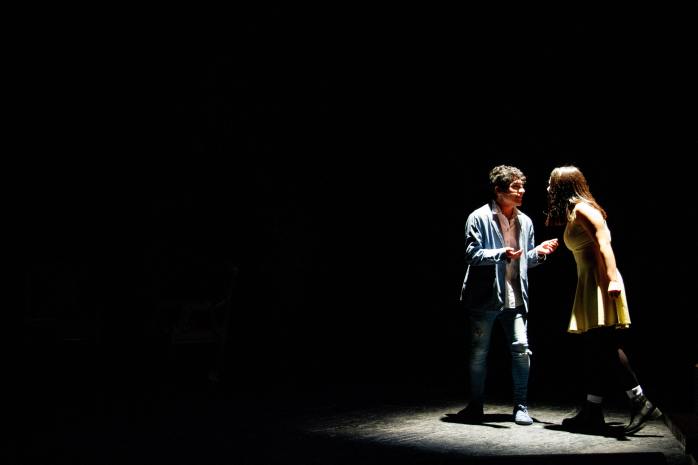
It’s the Quest. The challenge. My interest is in how far I can push myself. My stamina, my endurance, my focus, my determination.
I don’t think I’m alone in this. I would bet that most creatives are a little bit like this. Are you? If so, tell me more. What’s your favorite brand of challenge?
For now, I am just grateful for this realization. It explains so much about my life as a professional musician (and a student one, for that matter) but it also gives me a roadmap for a happy future.
I’ll always need a quest. Be it Shakespeare, Haydn Quartets, or the Pacific Crest Trail. I need to push myself. I need to put my limits to the test. Expand my sense of what is possible.
It also keeps life a bit more interesting.

I guess the main moral of this story is that as I gain some distance from this identity that I’ve had since I was 5 of being “a cellist”, I am finding that the qualities that I thought came from being “a cellist” are really just qualities that I had as “me”. And I used them in my life as a cellist, and I will use them apart from that life.
It’s a realization that the instrument was just that. An instrument through which my true self came through. I can give up the instrument, without giving up…well…me.
And that’s always the fear, isn’t it? The whole, “Who am I without my art?”
And I’m here to tell you this: You’re Still You. Beautiful, Completely Yourself, You.
Cheers,
Kate
P.S. Are you looking for some guidance regarding the next steps in your career? Whether that means getting strategies in place to scale things up, or figuring out how to streamline and delegate in order to create more time in your life for the things that are most important to you, let’s talk.
I offer free 30-minute consult calls where we talk about your goals, and what might be most helpful to you right now. I work with both musicians and non-musicians alike, and you can book that call right here.
Don’t Let the Clock Run Out on Your Dreams

As many of you know, the big topic that I’ve been pondering lately, and (slowly) working on a book about, is “Potential”. I wrote an initial blog post about it here, but today I wanted to continue the conversation a bit.
As artists, we have been taught to live up to an ideal of perfection since day one. But assuming that that initial “ideal” is several decades old and that we and the world have changed somewhat, my question revolves around what it looks like in the day-to-day adult world of someone (and someone with a life–relationships, responsibilities, work to do, a household to maintain) who is interested in “reaching their fullest potential.”
I was talking with someone the other day, and he was saying that he knows he wants to do more. He feels in his gut that he was put on this earth to do MORE. But he’s just not sure he has the skills necessary to achieve his vision and has no clue where to even begin. He also laid out the other 2 big ones. He didn’t have the money to take a bunch of classes or go back to school for another degree, and he didn’t have a ton of time left over after his existing duties as a performer, parent, spouse, and soccer coach.
What I told him surprised him and I don’t think he believed me for a long time. Here’s what I said:
It’s not your lack of skills, time, or money that is keeping you from moving forward on your vision. It’s 100% a lack of courage.

I know, I know…sounds like I’m trying to simplify a rather complex notion. But almost every single person who has booked a discovery call with me over the last several years has had some version of: “I don’t have the right skills, I don’t have the money, and I don’t have the time to achieve my dream.”
Until they do it anyway.
- They create, launch, and run the festival.
- They completely reinvent their performance career on a much higher level.
- They see their vision come into being.
- They see their project existing in the real world.
And with all of them. EVERY.SINGLE.ONE. (myself, included, btw) all it took at the end of the day, was courage.
And sometimes it’s the courage that leads the way to the skills, the time, and the money:
- The courage to ask your partner to take on some extra tasks so that you can claim a few hours each week.
- The courage to raise your rates, so that you can bring in an extra $1000 each month, OR work fewer hours for the same money.
- The courage to be a beginner (something that is EXTREMELY hard for artists and performers to do!) and download that first podcast or do that first youtube search that will help you learn the first of many skills.
- And most importantly, The courage to believe that it’s possible.
And as my clients have learned, courage is like a muscle, and the more you use it, the stronger that muscle gets, and the easier it is to use it. One client who was once so nervous any time she had to have a meeting with the director of her community teaching job that she would go to the bathroom and throw up, now has no trouble holding court in front of the entire board, leading to positive changes for the entire organization!
Courage.
So back to our day-to-day completely normal adult lives. How do we start moving forward towards those dreams that won’t stop nudging us? That 1 thing that we have said “I always thought it would be cool to…..” but never actually took it seriously enough. Or, you do truly mean to do it…someday…forgetting that we don’t actually have forever.
Unfortunately, there is a time limit on our dreams.
So let’s get cracking, shall we?

1. Name your dream/idea/vision. Say it out loud, or write it down, or take out an ad in the Times, I don’t care, but get it out of your head.
2. Take the first step. What is the very first tiny little baby step you can take to get yourself one tiny bit closer? Here are some ideas:
- Listen to a podcast either on the topic, or relating to a skill you want/need to develop
- Google “chamber music series in Kentucky” to see where your new trio could perform.
- Check out a Library book on grant writing.
- Go to the art store and buy the supplies you need to start branching out to a new medium.
Here’s a hint. The first steps are never new business cards, a shiny new website, or headshots. Those will come, eventually. What you need now is a step you can start and finish TODAY.
3. Give yourself positive reinforcement. When you’ve completed your first step, celebrate your win, and plan something small you can do tomorrow. Each day, you can ask yourself “What is my next best step forward?”
4. Practice flexing your courage muscle. Post the reel you made in Instagram (have the courage to post it in spite of what others *might* think of it!) Set some boundaries with a colleague (“I love chatting with you, but I really need to focus right now. Could we find some time afterward to catch up?) Ask for help: “I need a distraction-free hour each morning to get some writing done. Could you be 100% in charge of the kids from 6-7?”

The world has changed so dramatically in the last few years–particularly in the arts. More than ever before, it’s going to be up to us as creative individuals to lead the way forward. Our ideas matter, the new projects, programs, and initiatives, new ways of teaching, and new ways of doing anything, really are going to be what keeps the world spinning now.
And the feeling you’ll get when you take action and start moving forward on your dream? Eventually, it will be a reality, and you will look at it and say “wow! You exist! I did that!” Just like I have seen my clients do over and over again. It’s an incredibly powerful feeling, and one that brings joy, fulfillment, and a sense of both purpose and legacy.
I want that for you, my friend. What’s your thing? I can’t wait to see it.
Cheers,
Kate
P.S. Are you looking for some guidance regarding the next steps in your career? Whether that means getting strategies in place to scale things up, or figuring out how to streamline and delegate in order to create more time in your life for the things that are most important to you, let’s talk.
I offer free 30-minute consult calls where we talk about your goals, and what might be most helpful to you right now. I work with both musicians and non-musicians alike, and you can book that call right here.
What I Learned From Doing a 4-Day Work Retreat

A couple of weeks ago I found myself with an unusually clear week. A few of my 1:1 clients were traveling and we had moved their sessions to either the week before or the week after, and both my Bridge Online Cello Studio and my Bermuda School of Music teaching were finished for the summer. I didn’t have any meetings or appointments on the books, save for one 5 pm meeting on Thursday.
This was the moment I had been waiting for, and I seized it.
I declared Tuesday-Friday a Stay-At-Home Work Retreat. I have spent a lot of time over the past several months working IN my business, rather than ON my business. In other words, my days were taken up (quite happily, I’ll add) with 1:1 sessions, cello lessons, rehearsals, discovery calls, and writing my blog posts and weekly newsletters. There wasn’t a lot of time left over to work on tweaking my logo, cleaning up the copy on my website, updating some photos and social media handles, and putting important systems in place.
The same thing happens to us as performers, too, doesn’t it? We have periods where we have so many back-to-back performances that we spend all of our practice time learning new notes and in rehearsals and performances. Imagine 6 months of that, and then spending a week working just on fundamentals. Scales, etudes, focusing on your sound, changing your strings, getting your bow rehaired, and reorganizing your music collection.

Now, most entrepreneurs will decamp to a local hotel armed with whiteboards, journals, and a laptop–getting rid of all familial distractions to undertake such a retreat, but I live in Bermuda, and it’s difficult for me to justify spending $800 a night (plus food and gratuities) to sleep in a bed less than a mile from my own.
Tuesday morning I woke up feeling giddy. Like, Christmas morning when you’re four years old, giddy. I was armed with good coffee, fresh fruit, breakfast items, and a few healthy snacks. I locked myself in my office/studio and got to work.
Was it everything I dreamed of? Yes and No. Will I do it again? Absolutely.
Here are 6 things I learned about the process. A few things I will definitely repeat, and a few lessons learned.
1. A little prep-work goes a long way
I had a running list in my head of all of the things I wanted to tackle, and I spent some time on Monday trying to figure out an order that made the most sense. Ie. It didn’t make sense for me to batch write some content BEFORE I tweaked my logo because I’d have to go back in and manually add it to each one.
2. Give yourself time on Day 1 to have a good think-fest.
Do some goal setting, mission defining, and long-range planning. This is the time to dream and will make sure that everything you do during the following days flows in the right direction. I started by reviewing my last 12 months, and then I looked ahead to the next 12 months. Which things did I want to continue? What did I want to change? tweak? Stop doing altogether?
3. Everything will take longer than you expected
I vastly overestimated what I could get done each day. There are always going to be more things that I’d like to do in the time I have, but next time, I’m going to have a master list for each day in priority order. I spent the end of each day bummed that I was “behind” and hadn’t accomplished “enough” but when I took a moment on Friday afternoon and looked at everything I had done over the week, I was amazed. Set yourself up for success.

4. It’s nice to change your routine a bit
Most days I pour a coffee before my eyes are even open, but as far as breakfast is concerned, I’ll just wander into the kitchen whenever I get hungry and find…something. Before my retreat started, I picked up yogurts, bagels, smoked salmon, and some fruit, and each morning at 8 am sharp, I sat down and had a beautiful breakfast. It felt a bit more “hotel-like” and kept me in retreat mode when I easily could have slipped into my normal day-to-day routine.
5. Be clear about your expectations and intentions for the week with those around you, and ask for the help you’ll need
I told my husband (who is a teacher, and therefore, was going to be at home as well) that I was doing this work retreat and that I was going to be working really hard all week. “Gotcha!” he said “No interrupting Kate!” (he’s the best, by the way). He also walked the dog for me each morning and picked up a lot of the household tasks I normally do (grocery shopping, laundry, etc.) I acknowledge how lucky I am in the fact that I HAVE a partner to help out, but there are always people around to help you if you ask for it.
6. Once a year is not enough
Before Friday even ended, I had grabbed my post-its and blocked off 3 days at the beginning of each quarter to dedicate to a retreat. Beyond that, I am also going to Take 1 full day each of the other 2 months, and a half day each week that will be dedicated to certain tasks. My plan is to determine which tasks need to be done weekly, which are monthly tasks, and which ones are quarterly. Once I’ve nailed down a system that works for me, I’ll be sure to share it with you.
Are you already doing something like this? How are you structuring your time? What tweaks have you made to your system? I’d love to hear what’s working (or not working!) for you.
Cheers!
Kate
P.S. I know that not all of my lovely readers are entrepreneurs, but honestly, this kind of retreat transfers to every part of life. For performers (as I described above) for taking care of your house, the garden, your relationship? Finances? So many choices.
P.P.S. One of the most common requests I get from clients is to help them figure out systems they can put in place to help make their lives run smoothly, with less friction between performing, teaching, and family life. Often, the systems we create for them end up increasing their income AND giving them some free time in their schedule. So they have more time to do the things they love. Like save the world, or eat more ice cream. Either way, if that sounds like the type of thing you’d LOVE some help with, book a free 30-minute call with me and we’ll see how I might be able to help get you started.

Can Your Daily Habits Really Determine Your Success as an Artist?

The buzzword of the last few years has been “Habits” and I think we can all agree that we have James Clear, author of the #1 Best selling book (of all genres!) of 2021, Atomic Habits to thank for that. He goes deep into the HOW of habits. How to form them, How to quit them, and How they shape us.
But when it comes to a group of talented and highly trained artists, do our particular daily habits determine whether we will be successful or not?
Surely, things like how much financial support we have, who we know, and the particular talent we were born with have more to do with our level of future success than whether we do situps every night before bed, right?
Having spent the first part of my life working to achieve artistic success as a professional cellist, and now working as a coach to high-performing musicians, dancers, filmmakers, actors, and visual and spoken word artists, I have seen time and time again, that a) all talent being equal, the better habits win out every time, b) those things like financial support, contacts, and even our talent all come down to our daily habits, rather than simply being bestowed upon us, and c) an average talent with good habits beats a super talent without them over and over again when it comes to the long game.
Today, I want to share 3 habits/lack of habits situations that I have seen have a dramatic effect on a person’s level of success:
Example 1: Nurturing Your Network
It’s all about who you know, right? And as smarmy as that sounds just stated like that, when was the last time you were in a position to choose a group of people to work with and you didn’t start with your immediate network? It’s just the way the world works. We want to know that we will enjoy the people we are working with, and we want to trust that they are the right person for the job, so we choose people we already know.
But it’s about WAY more than the number of FB friends you have.
A while ago, I had a call with someone who knows EVERYONE. Seriously. This guy is super connected to all of the bigwigs in his industry. But he was frustrated that no one was offering up any opportunities. “If it’s all about who you know, and I know everyone, why isn’t it working for me?” he asked.
I asked him how often he nurtured those relationships.
“Huh?”
An essential habit that successful artists have built into their routine is to reach out to people in their network. Not because they need a favor, but because they have something to offer them. An article they thought they might enjoy. A text or a call on their birthday, rather than just the generic FB message, and these days in 2022, engaging with their social media posts–sharing them, commenting on them. It helps them, you end up being top of mind for them, and it opens the door to future conversations.

Example 2: Showing up Daily
I know in certain arts fields–I’m looking at you, ballet–there is a lot of structure in place when it comes to doing one’s daily work even at the professional level. You still go to class with the rest of the company each morning, and if you don’t show up, it’s noticed.
But in other fields like music, art, or writing, only the individual really knows how much they are working each day. Take a day off from practicing? No one will even know, right? There’s also that romantic notion of “waiting for inspiration to strike.” The artist bums around all day, and then suddenly runs over to the piano to start practicing at midnight––sleeping housemates and family members be damned.
Please.
The artists I have spoken to and worked with who had the most success had a much better handle on their routine. Some woke up before the sun and did the same warm-up routine every single day no matter what. Others, who maybe have different life circumstances, with young kids or a fluctuating freelance schedule, still know when they do their best work and do what they can to ensure they can work when they need to.
Of course, I’ve also seen the importance of taking time off to rest, and making sure one is balancing their craft work with having a life outside of their craft. So I’m not saying that in order to be successful you need to be a slave to your art. In fact, it’s quite the opposite.
By knowing your schedule, when you do your best work, and the available support and built-in parameters you’re dealing with, YOU are the one in control. You’re not a slave to the whims of your muse, You carve out time each day and work on your craft.

Example 3: Knowing How and When to Invest in Yourself
I think we can all agree that when it comes to starting out on a life in the Arts, there are a lot of costs associated with it.
As a student, we invest in Instruments, lessons, gear, ballet shoes, art materials, studio space, festivals, and pay-to-play concerts in Carnegie Hall. The list is almost endless. But we’re learning and growing, and it just comes with the territory.
The thing is, for many artists, the idea of investing in their growth ends the day they are handed a diploma.
“Alright! I’m a professional now. Guess I know what I need to know!” and off they go.
Successful Artists, however, continue to look for opportunities and ways to invest in themselves–a better instrument, a writing program, another degree, a coach, a professionally designed website, or taking some more lessons with a performing or teaching legend.
Unfortunately, these investments tend to be big-ticket items, and sometimes those are hard to fathom. It can feel far easier to spend $100 ten times, than to spend $1000 once.
I once spoke with an artist who desperately wanted to work with me. She “just knew” I was the right person to help her get her project off the ground and then she would be both artistically fulfilled and financially more stable. But she didn’t have the money to pay me at the moment. She needed to spend the summer working to save the money.
Totally fine. Her choice.
Fast forward to her Instagram account which shows her going out to (very) fancy restaurants every week, traveling on an extended summer trip to Europe with her college besties, and showing off her latest shopping hauls.
And again, that’s fine. Everyone has the right to spend their money how they wish. I literally spend money on dirt, so I don’t judge.
But when she booked a second call and tearfully BEGGED me to take her on at a reduced fee because she didn’t end up making any money over the summer?
That’s a hard no.
I won’t sit here and tell you where, when, or how you should spend your money. My point isn’t that some things are important to invest in and others are not. The point is that some people spend money according to their values, and others don’t. They spend money on whatever comes up at the time if they can “sort of” afford it.
Is it important to you to eat well, have interesting experiences with your friends, and live in the moment? Then, by all means, enjoy that trip, the shopping, and the gorgeous brunch at the fancy restaurant in town every weekend.
But if your values point elsewhere, make sure that is where you are putting your money. Even if it means that brunch is a hard-boiled egg and a black coffee made at home for a couple of months, it’ll be worth it to you in the long run to have the other things that really matter to you.

So there you have it–just 3 of the many habits that I have seen work time and again to bring the highest levels of success to artists.
1) Nurturing your network in a regular (and genuine) way.
2) Being more intentional and consistent about how (and how often) you work on your craft.
3) Knowing how and when to invest in yourself (according to your values and your long-term goals)
I hope you found this helpful. If you’re curious about what other habits you can put into place to set you up for success, click here for my full list of 10 Habits of Successful Artists. It’s something that I have been working on for a while now, and I’m excited to put it out there for you all as a thank you for being a Tales From The Lane reader.

Enjoy! And Cheers!
Kate
P.S. Summer is the perfect time to take a look at the direction your career is headed. If you’re not gushing with excitement about what you’re currently doing, let’s chat about what small or big tweaks you can make to get things going the right way. You can book a free 30-minute consult with me (absolutely no strings attached!) by clicking this link.
Making Space for Both Grief and Work During Stressful Times

Yesterday, my husband and I celebrated our 7th wedding anniversary. The day started out well. Cards and gifts, a long walk with Tango, a nice breakfast, and messages from friends and family streamed in, wishing us a beautiful day.
It was a little after noon that I heard the news. Another mass shooting. The 300th mass shooting in the last 186 days, in fact.
Except this one hit close to home. Literally.
Highland Park, Ill is a 10-minute drive from where I grew up. It’s where the Ravinia Festival is (the summer home of the Chicago Symphony) and where I spent several high school and college summers working. I have spent a lot of time in downtown Highland Park.
More importantly, it happened way too close to where my family still lives. My nephew’s girlfriend is from there. It’s a miracle to me that they weren’t at the parade.
So yesterday was full of grief and fear and worry. But that’s sort of par for the course these days isn’t it?
This latest shooting came right on the heels of a week of horrifying Supreme Court decisions that will affect us all. And those came right in the midst of horrifying testimony about the dangerous state of mind the “Leader of the Free World” was in on January 6th. (I’m sorry-did someone say something about him sending an armed mob over to the Capitol?)
And all that came, personally, on the heels of the sudden, random, and tragic death of a dear friend of ours.
The past month has been a doozy, to say the least.

The problem is, and not to be a complete downer, I don’t really see things easing up any time soon.
I’m seeing the posts on social media, I’m reading the texts from friends and family, and I’m hearing the words. The compounding stress of all of these events is beginning to take its toll on us as a society.
This constant barrage of stress is not sustainable, yet we must manage it, right? We can’t all just stay at home wallowing in our grief at the state of the world, but we also can’t (and don’t want to) bury our heads in the sand and just not think about it.
So how does one go about living a life, getting our work done (practicing, rehearsing, writing, working, caretaking, cooking meals, etc.) while also making space for this particular kind of grief?
After reading several different articles by people with far more expertise than I have on this topic, I’ve rounded up 7 of the top suggestions.
1. Practice mindfulness rather than self-identification
I thought this was really interesting and has helped me often. Instead of “I’m just so sad.” it’s “I’m feeling sadness right now.” It gives you permission to feel other things later and allows for the natural flow of emotions, rather than getting stuck, and spiraling into bad feelings.
2. Take media breaks
It’s tempting to stay glued to the screen to get the latest possible information, but unless that information will affect you or your actions in real-time (like those who were in hiding/sheltering in place while they searched for the shooter yesterday) just turn it off. You can catch up later, but nobody needs to have their heart racing and cortisol surging unnecessarily.

3. Connect with nature, and get some exercise
Because pacing around the kitchen isn’t doing you or your downstairs neighbors any good.
4. Engage your mind
When the stress and grief are causing the kind of brain fog that won’t allow you to get any work done, ease in with some mental busy work. Do a jigsaw puzzle, or the crossword, or knit a scarf. Make a new batch of sourdough starter. Once your brain has detached from the more stressful thoughts, you can redirect it towards productive work.

5. Make sure you’re balancing solitude with socializing
In trying times, you likely need both time on your own to process and think, and time surrounded by others–either to make you laugh or to share the burden. That balance will be different for everyone (know thyself).
6. Remember your “Why”
It’s easy to think to yourself “What difference does it make if I can play this concerto if the world is ending, and all of my rights are being taken away?” But it’s just as easy to think “my artistry can provide a platform, from which I can be a force for positive change.” choose wisely.

7. Go Easy on Yourself. (and Others)
Let’s just assume that everyone is doing the best they can at any given moment. You are. They are. We all are. Know that you’ll have good moments and bad ones. You’ll say and do the right thing, and you’ll say and do the wrong thing.
It’s okay.
And hopefully, with the suggestions above, our “best” will get a little bit better each day.
Sending all of you a giant hug. Here’s to better times ahead.
Cheers,
Kate
P.S. Did you find this helpful? Sign up for “The Weekend List”–my weekly newsletter that hits your inbox each Friday with more tips, tricks, and life hacks for creatives, as well as a curated list of things to read, try, ponder, or check out. All geared to help musicians and other creatives live their best lives.

How to Make Tough Decisions: A 5-Step Process

This past week I was faced with a tough decision. One of those decisions that I didn’t want to have to make, but it was on me to make it.
On Tuesday afternoon, Exactly 1 week before Day 1 of the Creative Leadership Summit I was running, I heard from one of my speakers. Their mother was having emergency surgery, and they needed to head cross-country to care for her and their elderly father. They weren’t sure they would be available during their session time.
“No problem,” I thought. “we can be flexible.”
On Wednesday I heard from another speaker. Covid had hit their household. Their spouse and one of their kids had it, and they were worried that it was only a matter of time before they were coughing like mad. They weren’t canceling….just giving me fair warning.
On Thursday, I started to not feel so great myself.
Meanwhile, I’m desperately trying to get summit schedules and promos and photos up on social media, but the speakers themselves are now up in the air, and I have zero energy. Do I wait and see? Do I try to replace them with less than a week’s notice?
Do I postpone the entire summit?

For most of our lives as artists, we are not the ones in the driver’s seat. Even when we’re sick, we’re expected to show up anyway. (I don’t need to tell you how many intermissions I spent lying down in the green room with a fever–just hoping to make it through the rest of the concert and get home to bed– because I’m sure you’ve had to do it just as many times.)
Bad weather? National Crisis? Global Pandemic? Not up to us whether the show goes on.
And that’s why “Making Tough Decisions” is one of the most important skills we must hone as we step into leadership roles in our communities and industries.
Over time, I have developed a 5-Step process for handling those moments, and I can tell you from personal experience, that this process works for ANY big decision. Both for work and personal ones. It is the process I used at various points in creating the Virtual Summer Cello Festival, and I used it when my husband and I were deciding whether to take a job opportunity in the states or stay here in Bermuda. (Spoiler alert: we stayed)

Step 1. The Information Check
Often we start making decisions before we have all of the information, so step one is to gather ALL of the info. Look to see where you are making assumptions, and to the best of your ability, fill those in with facts.
Example: my husband and I spent most of the weekend debating between 2 different road trip routes when I realized that we didn’t even know if his best friend was going to be HOME that week. The entire reason for taking that route would be to see him, so there was no point in moving forward until we answered that question.
Step 2: The Pros and Cons Check:
Old school, I know, but it works. Take your sheet, draw a line down the middle, and have at it. Write down everything, no matter how small or petty it might seem. Do this for each one.
Step 3: The Best Outcome Check
Look at each scenario and ask yourself “How would this one be the best outcome overall”. Make the case for ALL of the possible scenarios with everything you’ve got.
Option A would be best because…
Option B would be best because…
Option C would be best because…
This exercise will be both eye-opening, and very reassuring. You’ll likely see that while there might be a “best” outcome, there probably isn’t a “wrong” outcome. You’ll see that no matter what you do, you’ll be able to make it work. (and If you can’t see that, then just strike that option off the list!)
Step 4: The Value Alignment Check
You’ll notice how your pros and cons list comes into play, as well as your answers to the previous step. Is one “best outcome” ego-driven rather than truly aligned with your values?
I found myself thinking about how pushing through and having the summit this week no matter what would be best because I will have kept my word. I said it was going to be this week, people bought tickets for this week, and I want people to see me as consistent. It’s important to me that my word is worth something.
But actually, that’s more about my ego than anything else. The summit doesn’t NEED to be this week. And in fact, by NOT pushing through, and by not finding last-minute replacements, the summit will be even BETTER for those ticket holders if it’s held later when my ideal speakers and guests are all available.
The fact that I wouldn’t have to go through the trouble of refunding the VIP pass holders was also about my own time and effort (and actually, almost every single one of them chose to hold onto their passes for the postponed summit date!)
So in the end, although there was a bit of a Value stand-off between “I am someone who keeps promises and stays true to my word” and “I put out the highest quality work possible”, I decided that my “promise” of an amazing experience was more important to my audience than my “promise” that that experience would be this particular week.
Step 5: The Gut Check
Make the decision in your heart. Maybe tell one person close to you that you trust. How does it feel to say it out loud? Do you feel relieved? Anxious? You can even say them both out loud and check for changes in your breathing, heart rate, muscle tension, etc. For me, it’s always more a feeling than a thought.
When I Voxered my biz bestie and said the words “I’ve decided to postpone the summit” It wasn’t followed by a clear thought of “yes! That’s right” but I did feel very calm afterward, and immediately felt the tension in my back and neck release. Soon after, I was flooded with thoughts and ideas for the postponed Summit, and I knew I had made the right decision.
So, friends, I AM sorry and disappointed that I won’t be seeing many of you on zoom this week for the Creative Leadership Summit, but we will gather at the end of August (exact dates will be announced soon) and it will be amazing.
In the meantime, I hope that the above 5-Step Decision Making Process is helpful to you, no matter what kind of decision you need to make. If you try it out, please leave a comment and let us all know how it went for you.
And I can share this with you as well: In my experience, the more I have gone through this process, the more I trust it. A bonus is that I now trust that no matter what, I can make something work in some way, and I’ve also learned that I really can trust my gut. Deep down, we always know our own “right answers.”
Cheers,
Kate
P.S. Curious about what other attributes, habits, and mindset skills would be most helpful to you as you move towards up-leveling your career, step into more leadership roles, or re-structure your career to allow for more time and less hustle?
I’d love to chat with you about it. You can book a free (completely no strings attached!) 30-minute discovery call with me. We’ll meet over zoom and figure out what your next best steps might look like.

Why This is an Incredible Moment For the Arts

It makes me so happy to open up Instagram and Facebook these days and see my friends’ faces smiling back at me from various rehearsals and concert venues. Captions are back to the usual jokes about summer concerts, and gig mishaps.
It’s almost as if the Universe snapped her fingers and life went back to normal. Concerts, theater, exhibitions, and performances of all kinds are back on the table, and there is a general sense of relief amongst us all. And although I won’t be on stage anymore, I am right there with you, rejoicing at every season announcement popping into my inbox.
This time also brings with it an incredible opportunity for us artists and creatives. One that I sincerely hope we don’t miss out on.
Over the last 2+ years, I have talked to so many of you about your thoughts, ideas, hopes, and dreams–not only for your own life but for your entire industry. Time after time, you said “I’m sure a million people have had this idea” and I can assure you, I’ve never heard the same idea twice.
Some of your ideas were for new ways of harnessing technology to keep things going. Teaching studios, Festivals, Workshops, Community Zoom “gatherings”, Commissioning projects. And through the execution of those ideas, you found fulfillment and a different kind of job satisfaction. You felt the joy and exhilaration that comes with leading the way.
Some of your ideas, however, were steeped in a certain amount of frustration, given that it’s hard to start up an IRL concert series or an educational or a community initiative when everyone is in lockdown.
And here, my friends, is the opportunity.

With things opening back up, there is a narrow window of time where we can open them up differently. We can redefine what the industry looks like. How things are done. With more fairness, equality, technology, and new ways of having our artistic and creative voices heard.
Because the days of having the artists on stage, and the leaders in back offices are over. These days, more and more of those folks in the back offices are or were performers themselves, and more and more of the folks on stage have smart, valid ideas that would help improve the status quo.
Does that describe you? Are you someone who at some point in the last 2 years had an idea of something you’d like to see?
You don’t have to put that away just because the concert clothes have been dusted off. The two can exist beautifully.
Want to know how?
Wondering what it would take to step up and help create a new way?
Join me next week for the Creative Leadership Summit–happening June 28-30th from 12:00-1:45 ET each day.
You’ll hear from over a dozen artists from the worlds of Music, Dance, Theater, and Visual Arts. Artists just like yourself who have taken the bold step of taking their own ideas seriously. They have created new and better ways of doing things, and each of them is incredibly inspiring.
The best news? It’s all Free. Yep! FREE. You can register right here.
Want more? With a VIP pass, you’ll gain access to each day’s Bonus session (on doing your own PR, the ins and outs of grant writing, and how to be an expert fundraiser.) You’ll also get to participate in the “Redefining Yourself as a Leader” Masterclass I’ll be giving on Friday, July 1st (also at 12:00 ET) and you’ll get recordings of all of the Summit interviews and sessions so you can watch them at your convenience.
Join us for some inspiration. Join us to learn how others did it. Join us to learn how you can do it as well.

Whether you have a project in mind, or you’ve been feeling like you’re ready to take a seat at the table and have your voice be heard, this summit was created for you.
See you there!
Cheers,
Kate
P.S. Are you looking for some guidance regarding the next steps in your career? Whether that means getting strategies in place to scale things up, or figuring out how to streamline and delegate in order to create more time in your life for the things that are most important to you, let’s talk.
I offer free 30-minute consult calls where we talk about your goals, and what might be most helpful to you right now. I work with both musicians and non-musicians alike, and you can book that call right here.

An Open Letter to My Students

My Dear Students,
You might be curious as to why I have decided to step away from playing the cello–after so many years of focusing my life around it.
After all, this thing that you are striving towards–this ability to play well enough to get chosen for festivals, conservatories, competition winners, and performances–is so difficult to achieve, why would anyone just give it up?
One of you boldly asked if the shutdowns of the pandemic caused me to feel undervalued or disenchanted with society’s view of the professional musician. I thought that was a very good question.
But the answer is no.

Stepping away has far more to do with my own personal circumstances and choices that I have made.
Some are small, detailed choices (like choosing to NOT work most evenings and weekends) But mostly, it was the choice to spend my time doing other things.
People talk about having a calling in life. For a while, I figured mine was to perform–because that’s what I had always done. Don’t get me wrong, I loved it, had (have) a ton of great friends from it, got to travel all over the world because of it, and wouldn’t trade my cello playing years for anything. But it was something that just sort of happened. It was never a deliberate decision on my part.
I started at 5, practiced, had lessons and great teachers, got into festivals, got into NEC, then New World, then summers at Spoleto, Tanglewood, then Boom! I was a professional musician. It’s easy to get onto a path and get carried along without having to make many decisions.
And please know this, dear student: I had my share of rejections and low moments just like everyone does (and possibly more!) but the good moments were so great, and when saying yes means seeing and hanging out with your friends, and saying no means staying at home alone like a loser, you go (obviously).
And so it goes.
What the pandemic did, was force me to get creative and think out of the box. Ideas came to me that called me to “step up” as a decision-maker, to do things differently than they had ever been done before, and in doing that kind of work, my soul lit up.
- The work of creating something new, like the Virtual Summer Cello Festival.
- The work of mentoring groups of talented young cellists like yourself.
- The work of coaching and mentoring other professionals in creative fields like music, art, and dance so that they, too, could create new projects that would affect more people.
- The work of writing words and ideas that would help a vast number of people.
I had found my calling. Or it had found me. Whichever way you want to look at it.

But here you are, sacrificing time with family and friends in order to practice. Giving up lazy summers at the beach to attend an intense summer festival. Perhaps giving up the idea of being a “normal college student” in order to attend a conservatory.
And you might be wondering if it’s all worth it–if the people who come out the other side on top, want to walk away.
It is. And here’s why:
1. As a student of music, we learn about commitment, dedication, and discipline.
That commitment that means you get picked up from a sleepover before your friends are even awake in order to get to chamber music rehearsal week after week is the same commitment that gets you and your team across the finish line of a big work deadline later in life. The dedication that had you running to summer festivals to hone your craft further is the same dedication that you’ll need to finish your Ph.D. when your buddies are taking off to Greece for a month. And the discipline you showed by practicing most days of your life (even when you didn’t feel like it) will get you out for a run (even though it’s raining) when you’re training for your first marathon.
2. As a student of music, we learn how to strive for excellence in anything we do.
From a young age, we are taught that if we push ourselves to go past the point of simply learning a new piece, and really “perfecting” it, it becomes a completely different experience. Building our technique in order to execute a musical line with beauty and intention rather than being happy that it’s somewhat recognizable is what sets us apart in the workforce later in life. I remember my NYC musician friends who took temp jobs to earn some extra cash. The companies kept trying to hire them full-time because as musicians, they didn’t know HOW to do anything half-assed. It starts in the practice room but quickly leeches out into everything we do. We set a high bar, and we go after it. giving 100% to everything we do.
3. As a student of music, we learn the power of having a “universal language.”
Your music will take you all over the world, and you will come across people with whom you don’t share a spoken language, and still, you’ll be able to sit down and play music together. Without words, you’ll listen, feel, and understand each other’s intentions. You’ll see that no matter where people are from, you likely have more in common than not. That’s a powerful feeling, and knowledge that will serve you well in life.
4. As a student of music, we learn that emotions are malleable.
Life is 50/50. There will be as many bad days as good. As many moments of bliss as there are of heartache. Knowing the power music has to either express and lean into your emotions or to lift yourself out of them is hugely beneficial. If you don’t believe me, try opening a soirée with Mozart’s ebullient Eine Kleine Nachtmusik, and then follow it immediately with Puccini’s funereal Cristentemi. Trust me, your audience won’t know what hit them, or why they’re suddenly weeping into their champagne.
5. As a student of music, we learn from an early age how to connect the dots.
We learn who Beethoven is in chamber music. We learn about Germany from a book we read. We learn about Napolean and France in history class. Then we play Beethoven’s Eroica Symphony in youth orchestra, and it all comes together. We see how the various puzzle pieces fit, and we see how ideas, people, politics, scientific progress, literature, fashion, and art are all connected.
And, truly, I think that’s what people mean when they talk about creativity. I don’t think it’s a characteristic that people are born with. I think Creativity is simply the ability to see connections where others haven’t seen them before (along with a willingness and a curiosity to try things out.) Every time we play a new piece, every time we do some background reading on a composer, we’re fine-tuning that skill.

Dear Student, you might be wondering if you should go into music professionally or not. I can’t give you that answer. It’s something you have to want to do. But know this:
- Life as a professional musician is a wonderful life (and doesn’t have to include being a “starving artist”!)
- You don’t have to do it forever. You can do it now, and enjoy it until you want to do something else. There is ALWAYS something else to do. And you will NOT have wasted your time and efforts. Trust me on that one.
- Listen for, and follow your calling, and know that we sometimes get multiple callings over a lifetime.
Isn’t that wonderful?
Cheers,
Kate
P.S. Are you looking for some guidance regarding the next steps in your career? Whether that means getting strategies in place to scale things up, or figuring out how to streamline and delegate in order to create more time in your life for the things that are most important to you, let’s talk.
I offer free 30-minute consult calls where we talk about your goals, and what might be most helpful to you right now. I work with both musicians and non-musicians alike, and you can book that call right here.
On Giving Up My Performance Life

Here’s a riddle for you:
Q: What do you call a musician at the height of their career (whatever that means…) who decides to stop performing?
A: I don’t know. Nobody does that.
Except that’s exactly what I’ve done.
A few weeks ago I stood on the stage of an international performing arts festival, feeling that high of just having nailed the timing of the final cello/piano gliss at the end of Piazzolla’s Le Grand Tango, and took a bow for the last time in my career.
40 years after my first one.
I’m not so old that it was time to stop playing, so it wasn’t a matter of “bowing out graciously”
And I’m not finished working–I have plenty of exciting projects going, so I wasn’t “retiring”
And I’m not angry or disenchanted with music or cello, or anything like that, so I didn’t “quit”. That word is so full of defeat and anger. Neither was involved.
The truth is, our industry doesn’t really have a word for it, because it’s not something that people do. Once you’ve become a professional musician, you remain a professional musician until you die or are forced to retire under unpleasant circumstances.
We’re not supposed to admit that it’s possible we could simply choose to spend our time doing something else now.
For me, the decision has been brewing for quite some time. Back in 2018 I spoke to a few trusted friends and colleagues about my thoughts, and I was told over and over that I “couldn’t quit” it was like I had said the most absurd thing in the universe to them. They simply couldn’t fathom that I would even entertain the idea of not being a cellist. After all, it had been my entire identity since I was 5 years old.
They all suggested that I double down. Play better concerts in better venues and get paid higher fees, THEN I’ll be happy.

So I did.
And I thought I was. Until…
When the Pandemic canceled a 2-week West-Coast recital tour in early April 2020, the disappointment lasted about a minute and a half and was quickly replaced with an overwhelming feeling of relief.
I realized in that instant how burnt out I was, and I decided to call this pandemic-induced “year-of-no-concerts” a sabbatical. For 6 months, I wouldn’t even think about practicing or performing.
By the end of March, however, I had created the Virtual Summer Cello Festival, and by August, the Bridge Online Cello Studio was born, and somewhere in there, I started taking on coaching clients. October 2020 saw the very first cohort of Profit Pivot. There have now been 4.
And here’s the thing:
The sense of fulfillment, pride, and satisfaction that I got from creating something brand new out of thin air and seeing the impact it had on these students was so far beyond how I had ever felt after my best, most successful performances.
Watching a client have a major a-ha moment, create their own legacy projects, and see their dreams come to fruition lights me up more than anything.
And to be honest, I suddenly felt like for me, performing was perhaps more about my own ego than anything else. Yes, I’m sharing music. Yes, I’m communicating stories and emotions. Yes, I hope the people in the audience are touched and moved, and feel a wonderful sense of human connection. But I also just wanted to play really well, and have them like me and the way I played. I certainly didn’t feel like I was making any kind of impact on the world.

But in the work I am doing as a coach, a mentor, and as a writer, I DO feel like I’m making a difference.
When a client messages me out of the blue and says that they have just realized that every dream they had when they started working with me has now come true and that they are happier than they ever could have imagined because of the work we have done together?
I’m pretty sure my concerts didn’t quite have the same effect on people’s lives.
I’ll spill the tea about what is next for me in a future post, but after sitting in this “post-cellist” life for a little while now, here are a few interesting observations.
1. People get VERY invested in other people’s identities, and they might need time to grieve their loss too.
2. That doesn’t mean you owe it to anyone to remain steadfast in their view of you. Just because they have always known you as “Joe the pianist” doesn’t mean you always have to BE Joe, the pianist.
3. People in industries other than music seem to understand that this was a big, momentous decision, but are mostly excited to hear about what’s next for me.
4. Most people want to reassure me that I can always change my mind at any time, and that it wouldn’t take me more than a couple of weeks to get back my chops back. (Great! But I’m all set, thanks.)
5. An alarming number of people have looked at me and said “yeah, but, like, you’d play a concert with/for me if I needed you, right?” (Correct Answer: nope! Not even for you. But I still love you.)
6. People in the music industry have either unfriended/unfollowed me (because without a cello, I’m useless to them?) or reached out to tell me that they also want to stop playing and do something else, but feel like they aren’t “allowed” to.
7. The biggest and most surprising bit of inner turmoil I faced was anxiety over whether people only liked or loved me as a cellist. I mean, my husband met a cellist, fell in love with a cellist, and married a cellist. Would he still want to be with me if I stopped being that cellist? (Correct Answer: So far, Yes! (phew.))

I’m still not sure what to call it. “I’ve quit being a cellist” doesn’t sit well when I’m on zoom giving a lesson on the Barber Cello Concerto, and “I’ve retired” doesn’t sit well when I’m working with a client on strategizing their next project launch, and “bowing out graciously” just makes me sound old and decrepit. Despite how my knees felt after this morning’s run, I’m not QUITE there yet!
So I’ll offer this, to anyone who finds comfort in labels or definitions: I’m moving on from performing in order to focus on other, more fulfilling facets of my career. And it feels amazing.
I’m so grateful for my training, my teachers, the sacrifices my family made in order to pay for lessons, instruments, festivals, etc., (apologies to my poor brother who never got to go on nice vacations growing up “because cello lessons are expensive”) and for the incredible opportunities that came my way because of my cello playing; but those experiences are mine forever. The friendships I formed through music? I treasure them deeply, and those get to remain intact too.
I just don’t have to practice octaves anymore 😉
Cheers,
Kate
P.S. If you’re looking for some guidance regarding the next steps in your career, whether that means getting strategies in place to scale things up, or figuring out how to streamline and delegate in order to create more time in your life for the things that are most important to you, let’s talk.
I offer free 30-minute consult calls where we talk about your goals, and what might be most helpful to you right now. I work with both musicians and non-musicians alike, and you can book that call right here.

How Gardening Made Me a Better Musician

Throughout my life, there are only two things that have remained constant fixtures: Playing the cello, and Gardening.
In fact, my 2 earliest memories are of eating all of the raspberries in the allotment when I was about 3, and playing French Folk Song in my red and white strawberry dress for my Kindergarten class. (I’m not sure if I was more proud that I got to wear a pretty dress to school or play my cello for my classmates. I think they brought equal amounts of joy that day).
Since that first performance at age 5, I have always had to practice. And with the exception of the years I was in school at New England Conservatory, and then in Miami for the New World Symphony, I have also always had a garden.
Over the past two years, through the work I’ve been doing with my Virtual Summer Cello Festival, and Bridge Online Cello Studio students, I have spent a lot of time boiling down the best, most efficient, and most effective methods of crafting music (ie: practicing). Alongside that, came the time and space to learn more about the best, most efficient, and effective methods of growing a garden.
And, surprisingly, they are exactly the same.
Here are 10 things Gardening can teach us about being a musician (and vice versa)

1. It’s good to start with a plan
In gardening, one must look at their space, the amount of sunlight it gets, what and how much they want to grow, and at which point of the year those plants will thrive. Even here in Bermuda, there is no point in planting lettuce in June. It’s just too hot, and don’t expect your peppers to grow in January–too dark!
Likewise, as musicians, it’s important to look at the year. When do you have auditions, competitions, performances, and tours? How much time do you have to practice? Can you repeat programs? When is the best time in the year to schedule the premier of that (totally impossible to play) new piece? Probably not the week you get back from vacation.
2. Assume the plan will change along the way.
I had the perfect plan for one of my flower beds. Onion sets would be planted in mid-October and would be ready for harvest in mid-March–just in time for my pepper and eggplant seedlings to go into the ground. Except…the cold fall meant that the onion sets weren’t available until early November, and they weren’t ready to be pulled until mid-April. Meanwhile, my peppers and eggplants were bursting out of their little pots. I don’t know why the onions are taking longer than usual, but they are. And instead of trying to force them (only to be faced with rotten onions later on), I needed to adjust. So, we changed course. I put the peppers and eggplant into the potato bed (I’ll find another spot for those later) and can let my onions take whatever time they need.
In Music, we often have to adjust. Perhaps you planned on learning some new rep for an upcoming performance, but life got in the way, and you didn’t have the necessary time to adequately prepare it. So you swap it out for something that feels more comfortable. You’ll have time to learn and perform the new rep later. Often students will get “stuck” on a concerto because competitions and auditions keep popping up and they need to use it….again. And then they win, so they need to keep it ready to perform.
So yes, the plan will change and you will need to adapt, but without the plan in the first place, you’d just feel lost all the time and wouldn’t know what you were adjusting to.
3. Symbiotic relationships are super important
In the plant world, if you plant certain things in close proximity, you’ll have greater success. My yields improved dramatically this year when I planted Borage (a plant with little blue flowers that are like crack for bees) amongst my vegetables. My garden is FULL of bees now, happily sucking the nectar from the borage, and then pollinating all of my vegetables. But, putting certain other plants next to each other is a bad idea. One attracts a bug that will decimate the other, for instance. So it’s important to know what works with what, and which things to keep away from each other.
Same thing in music. It’s so important to find other musicians to collaborate with that make your heart sing. That pianist that always seems to make you play better–where rehearsals are full of laughter and inspiration, the quartet that has an easy way of communicating with one another. And it’s equally important to understand that, for whatever reason, some people might not be the best fit and they never will be. Don’t try to force it. Your companion plant is out there.

4. Forcing it with fakeness might work in the short term but never in the long term.
Ahhh…synthetic fertilizers. Use it on your plants, and they will double in size, throw out tons of flowers or vegetables, and generally shine for you. But they won’t taste as nice, it’ll kill all of the good insects buzzing around, and you’ll be destroying the soil (so good luck next season!)
As musicians, we can see right through fakeness…eventually. The person at the rehearsals who wants to be your BFF, hang out, have lunch, grab a coffee, and then, ZING, starts hinting (not-so-subtly) that they want you to get them on that sweet sweet gig you get to do every summer? Yeah. don’t do that. Form genuine relationships with the people you work with. See above about whether it works or not.
5. Work with what you have
Some tasks in the garden require heavy lifting, a lot of energy, and a lot of time and focus. Yesterday, I planted a pomegranate tree that has been sitting in its pot long enough. It needed to go into the ground. But I knew it would require a lot of digging, dragging large bags of soil and compost, pruning the tree, etc. I meant to do it on Saturday, but I was feeling a bit low energy on Saturday, so instead of planting the pomegranate tree, I did some other important tasks that required less exertion. Sunday I had more energy and the tree got planted.
I’ve never understood people who had the same practice routine that they did day in and day out. No matter what. I teach my students different ways to approach their practice that go along with what kind of mood they’re in. From slow, quiet intonation work, to a full-out mock performance run-through, to drilling the trickier passages. We can use our shifting energy levels to our advantage if we pay close attention to them. This also takes away the “I can’t practice, I’m too tired.” excuse. Because they know there is work that they can do when they’re tired, and it will still benefit them.
6. Grow what you love and what excites you.
I’m not going to grow turnips, and I’m not going to grow kale. I don’t care how easy they are. I don’t care how healthy they are. I don’t like them. I never have, I never will. And I have grown many a kale plant that just grows and grows and I never pick the leaves (because I don’t like it) and they take up a ton of space, and I feel virtuous for growing Kale, and everyone comes over and remarks on how awesome it is that I’m growing kale (and such an enormous plant, too!) I’m done with Kale. And Turnips.
I also spent years (so many years) of my life playing contemporary music. From NEC to New World, to Tanglewood, to freelancing in Boston, it seemed the cool kids were always the “new music” crowd. I loved the people, I loved the scene, I loved that I was a part of something great and important–allowing today’s generation of composers to be heard– and I played a lot of great pieces. Oliver Knussen, George Benjamin, Michael Gandolfi, Jessie Montgomery, Andrew Norman, Caroline Shaw, Joan Tower. I could go on and on with all of the great experiences I had.
But I didn’t love it. My dyslexic brain has a REALLY HARD TIME reading music in general, and this was just exhausting. And in between those great moments were a lot of just “meh” moments, and in between those, were some really unbearable moments. So while I will always support new music (musically and financially) I’m not going to play it unless I really want to.
So please, play what you love. Explore, take risks, all of that, but mostly, play what you love.

7. Quiet, calm Observation is your best tool.
Sometimes I just sit in my garden with a cup of coffee and just watch. I see where the bees go, how the sun is hitting certain plants more than others, how that branch has grown so much it’s casting shade on the beets, etc. I notice things I wouldn’t normally have seen, and I’m able to make the necessary adjustments.
In the practice room, it’s just as important to spend time quietly observing your work as it is hacking away at it. The quiet observation can come from looking at the score and noticing new details, or from listening to a recording you just made and taking notes.
Take moments here and there to just watch. What’s happening with your shoulder there? Is that tension? And there…that phrase didn’t seem to go anywhere. What does it need?
8. Gathering data and adjusting accordingly will lead to success.
I keep a garden log, and when I was a student, I kept a practice log. I wanted to learn what worked, and what didn’t. From my garden log, I learn just how long it took a seed to germinate. I learned which plants will thrive in Bermuda, and which will say “no thanks!” I learn how late in the season I can grow potatoes before they succumb to blight due to humidity, and I learn the results of various experiments I try. All in the name of doing it better next time.
In practicing, the log or journal can keep track of how long it took for a piece to be committed to memory, or how many weeks it took you to get that tricky passage in tune and up to tempo. Recording yourself is, of course, one of the best ways to collect data: Where are you in the process right now? You can take notes on what you want to fix, and work from those.
I’m a big believer in the Pareto Principle: That 80% of your results will come from 20% of your effort. Keeping track of things will teach you what your 20% is. Do you make more progress when you practice at a certain time of day? When you’re actively listening to recordings (yours and those of other professionals?) when you practice slowly? Or when you start with a full warm-up? What is working? What is a waste of time?
9. It’s all about the foundation
At the end of the day, it’s about the quality of your soil. The micro-organisms that are happily living underneath the ground eating, pooping, dying, and decaying. It’s incredible what is happening down there. The worms are creating holes in the soil for the plant roots to crawl into. Without those holes, the roots get stuck. Stuck roots mean stunted plants. But you won’t see any worms unless there is good organic material in that soil. Compost, vegetable scraps, seaweed–all that good stuff. And pour that synthetic fertilizer on the plants to get them to grow anyway? You can definitely forget about those worms.
Any musician will agree that without a foundation of good technique, proper posture, bow hold, embouchure, etc. there is no amount of talent or time in the practice room that is going to help. As boring as it might be to stare at your slowly moving arm in a mirror for 5 minutes, It is worth spending time on those foundational basics. Without it, you won’t get very far.
10. Patience is key.
You can’t force a season. Gardening has a rhythm built-in. you plant the seeds and wait for them to germinate. Then you plant them and wait for them to grow. Then you harvest them and wait for them to finish, then you let the soil rest a bit and…wait. Even here in Bermuda, where we technically can grow food year-round, the summers are generally too hot and dry for things to be very happy. In fact, my sun and heat-loving nightshades (tomatoes, peppers, eggplants) will go dormant from late July to August. They won’t die. They just stop producing for a bit, and when things cool down a bit, they kick back into gear.
As musicians, we need to build in a rhythm as well. We have “the season” from September until May, and then “the summer” from June-August. And summer festivals feel wildly different than the rest of the year, but we need to think about a rhythm to our work. A new piece. Getting to know it, figuring out our interpretation, memorizing (if appropriate) performing, making it our own. All of these things need time, and they need patience. We have all had students (and have all probably BEEN that student at some point) that always had their eye on “the next piece” and was always in a hurry to be “done” with their current repertoire.
Patience, grasshopper. All in good time.

Conclusion:
For me, being a cellist was always about the process, from learning a new challenging piece to playing around with concert programming, I loved preparing for things even more than I loved actually doing them (though that was fun, too)
Same with my teaching. I love watching the growth from one lesson to the next, which exercises will help this student the most? I had a student perform this past Sunday-a student who for years suffered from crippling performance anxiety, just walk onto the stage confidently and played the beep out of the Boccherini Concerto. I was proud of her performance, of course, but I was more moved by what it represented for the growth in her mental game than her musical one.
And as a gardener, I suppose it’s the same. While I do love sitting and admiring my plants, flowers, veggies, bees, happily buzzing away, and all that good stuff, What I truly love about gardening, is seeing the health of my soil improve from year to year. More worms, greener plants, larger vegetables. I love planning new beds and observing what happens when I do this, or that. Does it improve the situation or make everything die?
Our work as musicians is so much more rewarding if we see it for the long game it truly is. What relationships will we nurture?
How can you take that long view this week in your own work? What plan can you put in place? How can you adapt that plan? Who can you help/accept help from? Do what feels more organic and authentically you? Build on your strengths? Amend your weak points? Play music that excites you? Calmly observe your work? Learn from the data? Lay a good foundation? Show patience with yourself?
Happy Practicing (or gardening….if that’s your thing 😉
Cheers,
Kate
P.S. Did you find this helpful? Sign up for “The Weekend List”–my weekly newsletter that hits your inbox each Friday with more tips, tricks, and life hacks for creatives, as well as a curated list of things to read, try, ponder, or check out. All geared to help musicians and creatives live their best lives.